

Sustainable Practices in LED Lighting: Environmental Impact and Lifecycle Assessment
Sustainable Practices in LED Lighting: Environmental
Impact and Lifecycle Assessment
As the demand for environmentally responsible solutions continues to grow, lighting plays a key role in how businesses and organizations approach sustainability. LED technology has emerged as a frontrunner in energy-efficient lighting, but sustainability goes beyond energy savings alone. In this blog, we’ll explore the environmental benefits of LED lighting and how businesses can implement sustainable practices through lifecycle assessments and everyday operations.
Environmental Benefits of LED Lighting
LEDs are well-known for their energy efficiency, but their sustainability benefits extend even further:
Reduced Energy Consumption
LEDs use up to 80% less energy than traditional incandescent or fluorescent lighting. This directly reduces greenhouse gas emissions, helping businesses lower their carbon footprint while also cutting energy costs.
Long Lifespan
LED fixtures last significantly longer than traditional alternatives, often up to 50,000 hours or more. This longevity means fewer replacements, reduced material waste, and less frequent manufacturing-related emissions.
Lower Heat Emission
Unlike incandescent bulbs, LEDs emit very little heat. This contributes to more stable indoor temperatures and lowers cooling loads in commercial buildings, leading to further energy savings in HVAC usage.

Understanding Lifecycle Assessment (LCA)
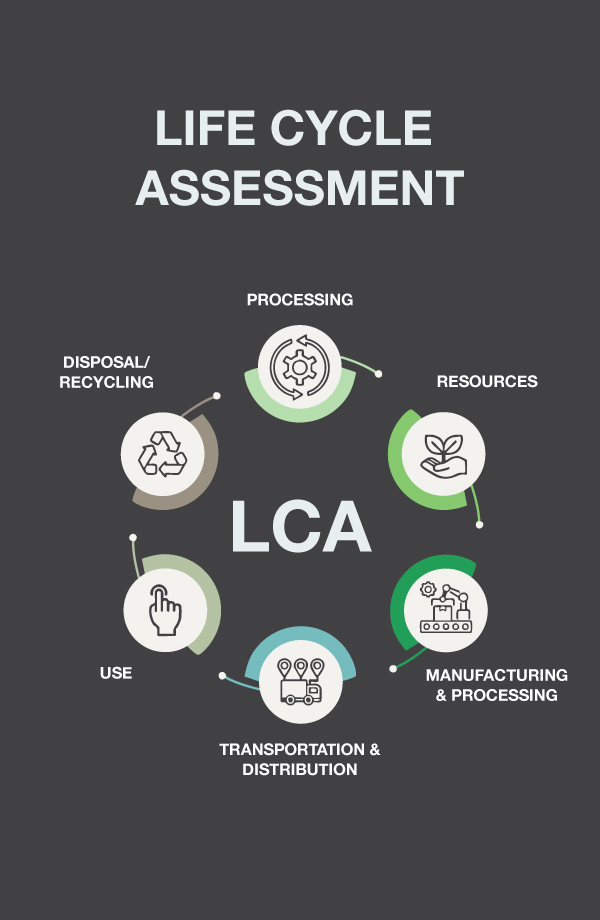
A Lifecycle Assessment (LCA) helps evaluate the total environmental impact of a lighting product from creation to disposal. It gives a full picture of sustainability beyond just energy use.
1. Manufacturing
An LCA begins with the sourcing of raw materials and the production process. Assessing this stage includes looking at:
What materials are used in the fixture?
Are they recyclable, low-impact, or sustainably sourced?
How much energy and waste is generated during manufacturing?
2. Usage
The operational phase is where LEDs shine. With high efficiency and long lifespans, LEDs drastically reduce energy use over time. To maximize sustainability:
Install motion sensors, timers, or photocells.
Select the appropriate light levels and colour temperatures for each space.
Regularly inspect and maintain fixtures to ensure optimal performance.
3. End of Life
Disposal and recycling are critical for reducing long-term environmental impact. Many LED components, including aluminum housings and certain plastics, are recyclable.
Work with recycling programs or manufacturers that support take-back programs.
Avoid sending old fixtures to landfills when responsible alternatives are available. See below for more details on how to recycle properly with CSC LED fixtures.
Implementing Sustainable Practices: How to Make It Happen
Sustainability starts with product choice, but it’s also about how you implement those choices throughout your business. Here’s how to integrate eco-conscious lighting practices effectively:
1. Choose Sustainable Products
One of the most effective ways to reduce environmental impact is by selecting lighting products that actively support sustainability goals—and that includes reducing light pollution.
Choose DarkSky Approved Products:
Opting for DarkSky-approved fixtures helps minimize light pollution, supports wildlife preservation, and maintains clearer night skies.
To see a full list of our DarkSky-approved products, [click here].Use Smart Controls to Reduce Waste:
Selecting products with built-in photocells or motion sensors, or adding them to your fixtures, helps cut down on unnecessary energy use by ensuring lights are only active when needed. These controls are ideal for pathways, parking lots, and other intermittently used areas.
To see a full list of our Controls, [click here].Sustainability Built into Our Process:
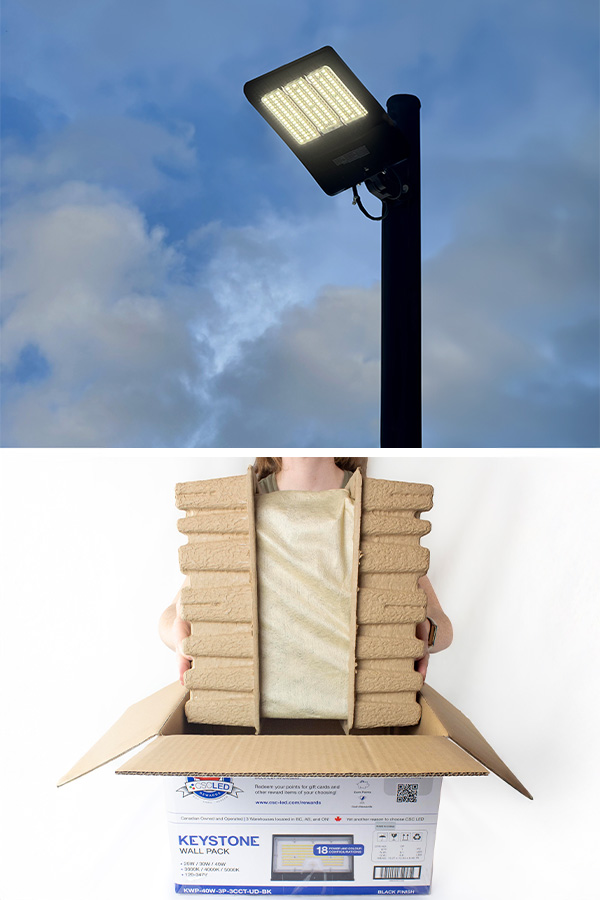
At CSC LED, sustainability is embedded in everything we do.We offer mounts separately, helping reduce waste from unused or unnecessary components.
Our packaging is 100% recyclable, made from cardboard and recycled bamboo fibres, an eco-friendly alternative to plastic.
These small choices, multiplied across projects, lead to a much larger positive impact.
2. Participate in Take-Back & Recycling Programs
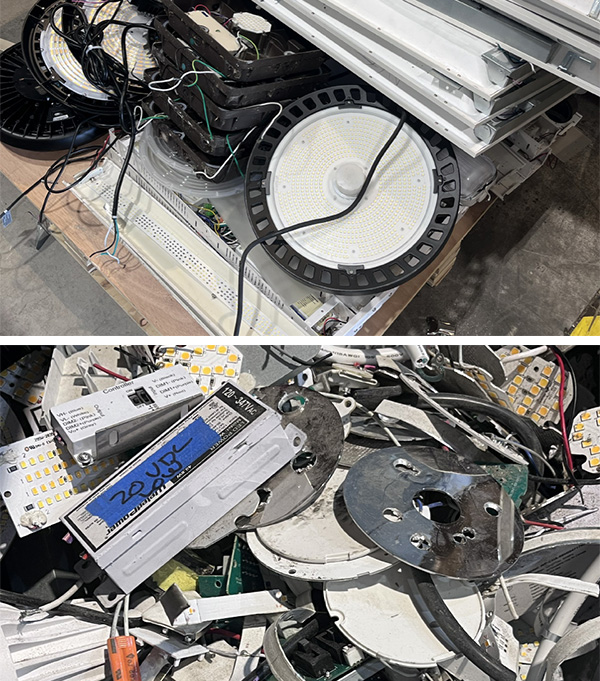
At CSC LED, we’re committed to reducing waste through our Take It Back program. Here’s how it works:
Return any CSC LED fixture—old, damaged, or retired—to one of our branches.
We’ll handle the proper disposal and recycling, ensuring materials are diverted from landfills. This program makes it easy for distributors, contractors, and end users to act sustainably without added burden.
Encouraging clients or team members to use this service helps create a culture of responsible disposal.
To see our Take It Back policy, [click here].
3. Educate Your Team and Partners
Sustainable lighting is most effective when everyone is aligned. Host training sessions or share best practices that cover:
How to install and operate lighting for maximum efficiency.
How to use lighting controls and smart systems to reduce energy waste. The importance of recycling and how to access available programs.
Even simple tips, like turning off lights in unoccupied areas or performing regular maintenance, can significantly boost sustainability outcomes.
Explore our education videos here.
Lighting the Way to a Greener Future
By choosing LED technology and embedding sustainability into everyday practices, businesses can make a measurable difference. From reducing emissions and energy usage to supporting responsible disposal and recycling, LED lighting is a critical component in building a more sustainable future.
Looking to make your next lighting project more environmentally friendly?
Let our team at CSC LED help you choose the right solutions, without compromising on performance or style.
Contact us at info@csc-led.com to learn more about our sustainable lighting products and programs.