


The Ultimate LED Lighting Temperature Guide
The Ultimate Lighting Temperature Guide
Choosing the right LED fixture involves more than selecting wattage, lumens, and beam angle. Colour temperature—measured as correlated colour temperature (CCT)—also plays an important role in how a space looks, feels, and functions.
From warm 2700K lighting in a comfortable residential living room to cooler 4000K or 5000K lighting in a warehouse or task-focused environment, the right CCT can help support the intended use of a space.
CSC LED offers lighting solutions ranging from 2700K to 5000K, including fixtures with selectable CCTs that give contractors and specifiers greater flexibility from one project to the next.

What Is Colour Temperature?
Correlated Colour Temperature (CCT) describes the colour appearance of white light and is measured in Kelvin (K). Lower CCTs produce warmer, more yellow-toned light, while higher CCTs produce cooler, more blue-toned light.
It is important to remember that CCT does not describe how bright a fixture is. A 3000K fixture can produce just as much light as a 5000K fixture. Brightness depends on factors such as lumens and illuminance.
Understanding the 2700K–5000K Range
CCT | Appearance | Common Character |
2700K | Warm white | Comfortable, inviting, residential |
3000K | Warm-neutral white | Welcoming, balanced, architectural |
3500K | Neutral white | Balanced, natural, versatile |
4000K | Cool-neutral white | Crisp, clean, task-oriented |
5000K | Cool white | Bright, crisp, daylight-like |

There is no single “best” colour temperature for every application. The right choice depends on what the space is being used for, how people interact with it, and the atmosphere the lighting is intended to create.
2700K–3000K: Warm, Comfortable & Inviting
Warm white lighting creates a softer, more welcoming appearance and is commonly used where comfort, relaxation, and atmosphere are important. It works particularly well in residential spaces and hospitality environments, while 3000K can provide a slightly cleaner appearance where some task visibility is also needed. For outdoor applications, warmer CCTs can also help minimize the visual and environmental impacts associated with higher-CCT light. DarkSky International recommends 3000K or lower for residential outdoor lighting and limits its general Approved Luminaires program to a maximum of 3000K.
Environment | Application Examples | Why Consider 2700K–3000K? |
Residential – Indoor | Living rooms, bedrooms, dining rooms, kitchens | Creates a comfortable, inviting atmosphere; 3000K offers a balance between warmth and everyday task visibility. |
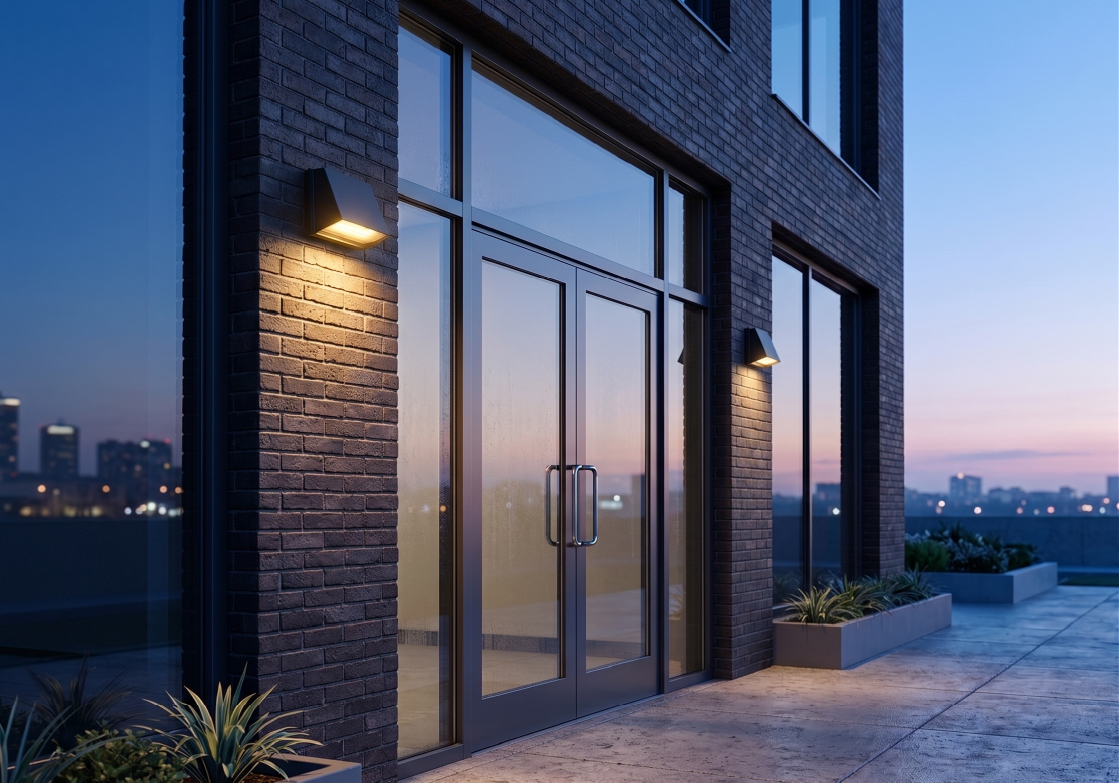
Residential – Outdoor | Entrances, patios, pathways, landscaping | Provides a softer appearance that complements residential architecture and outdoor living spaces. |
Commercial – Indoor | Restaurants, cafés, lounges, hotels, boutique retail | Supports a warm, welcoming atmosphere and can complement interior finishes and design elements. |
Commercial – Outdoor | Building entrances, patios, architectural accents | Creates a warmer exterior appearance where atmosphere and visual integration are priorities. |
Industrial | Break rooms, boardrooms, staff areas | Can provide a more comfortable environment in non-production spaces where task-focused lighting is not the primary requirement |

3500K–4000K: Balanced, Versatile & Task-Friendly
The middle range offers a balance between warm and cool light, making it one of the most versatile choices for commercial and industrial environments. These CCTs can provide a clean, neutral appearance without the noticeably cool tone of 5000K. They are well suited to spaces where people need to perform everyday visual tasks while maintaining a comfortable overall environment. CCT should still be considered alongside wattage, glare, uniformity, and colour rendering when developing a complete lighting design.
Environment | Application Examples | Why Consider 3500K–4000K? |
Residential – Indoor | Home offices, kitchens, garages, utility rooms | Provides a cleaner, more task-oriented appearance while remaining comfortable for everyday use. |
Residential – Outdoor | Garages, driveways, larger exterior areas | Can provide a crisp appearance where greater visual clarity is needed, although warmer CCTs may be preferred for many residential outdoor spaces. |
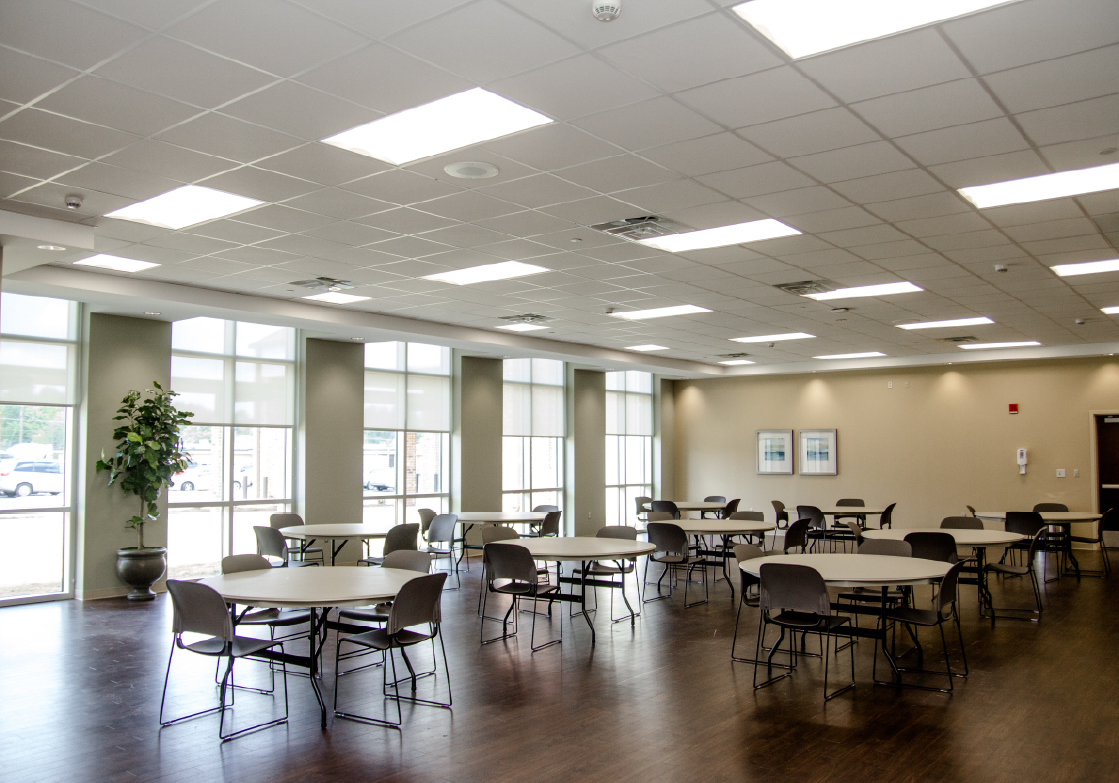
Commercial – Indoor | Offices, classrooms, retail stores, showrooms, clinics | Provides a neutral appearance well suited to work, learning, customer-facing, and general task environments. |
Commercial – Outdoor | Parking areas, walkways, building exteriors | Can provide a clean, consistent appearance with good visual clarity for general exterior applications. |
Industrial – Indoor | Warehouses, distribution centres, aisles, workstations | A versatile range for general industrial environments, helping provide a crisp visual environment for navigation, product identification, and routine tasks. |
Industrial – Outdoor | Loading areas, service areas, building exteriors | Supports general visibility while maintaining a more neutral appearance than 5000K. |

4000K–5000K: Crisp, Clear & Task-Oriented
Higher CCT lighting produces a cooler, more daylight-like appearance and is often selected for environments where visual clarity and a crisp, task-oriented atmosphere are priorities. Research has found that higher-CCT light can increase alertness in some conditions, but the effect depends on factors such as illuminance, timing, spectrum, and individual response. For this reason, higher CCT should not be treated as an automatic solution for productivity or concentration. Instead, it should be selected as part of the overall lighting design.
Environment | Application Examples | Why Consider 4000K–5000K? |
Residential | Workshops, hobby rooms, detailed work areas | Provides a crisp appearance for spaces where visual detail is more important than a warm atmosphere. |
Commercial | Dental offices, examination areas, workshops, service areas, stockrooms | Supports a clear, task-oriented visual environment for detailed work, examination, repair, or material handling. |
Industrial | Manufacturing, assembly, inspection, quality control, detailed workstations | Well suited to environments where workers perform visually demanding tasks and need a crisp, clear environment. |
Industrial – Outdoor | Loading docks, utility areas, service yards | Can support visual clarity around equipment, vehicles, materials, and active work areas. |

For outdoor applications, selecting the highest CCT available is not necessarily the best approach. Glare, light trespass, surrounding properties, wildlife, skyglow, and the desired character of the site should all be considered. DarkSky International recommends warmer outdoor lighting where practical and limits its general Approved Luminaires program to 3000K maximum.
These are starting points, not universal requirements. Local codes, project specifications, IES recommendations, illuminance targets, colour rendering, glare, controls, mounting height, optics, and surrounding conditions should all be considered when selecting a lighting system.
Why Selectable CCT Matters
One of the biggest advantages of modern LED lighting is the ability to choose or adjust CCT based on the application. A single fixture series can serve multiple spaces without requiring a completely different fixture for every project.
CSC LED offers a variety of lighting series with 3CCT through 5CCT selectability, giving contractors and specifiers greater flexibility to choose the appropriate colour temperature for each application. From residential and commercial interiors to industrial and outdoor environments, selectable CCT options make it easier to match the lighting to the space without requiring a different fixture series for every project.
CCT Is Only One Part of Good Lighting Design
Colour temperature can dramatically change the appearance of a space, but it should never be considered in isolation.
A successful lighting design also considers:
Illuminance — How much light reaches the task or surface.
Uniformity — How consistently light is distributed throughout the space.
Glare — Whether the fixture or reflections create visual discomfort or reduce visibility.
CRI — How accurately colours appear under the light source.
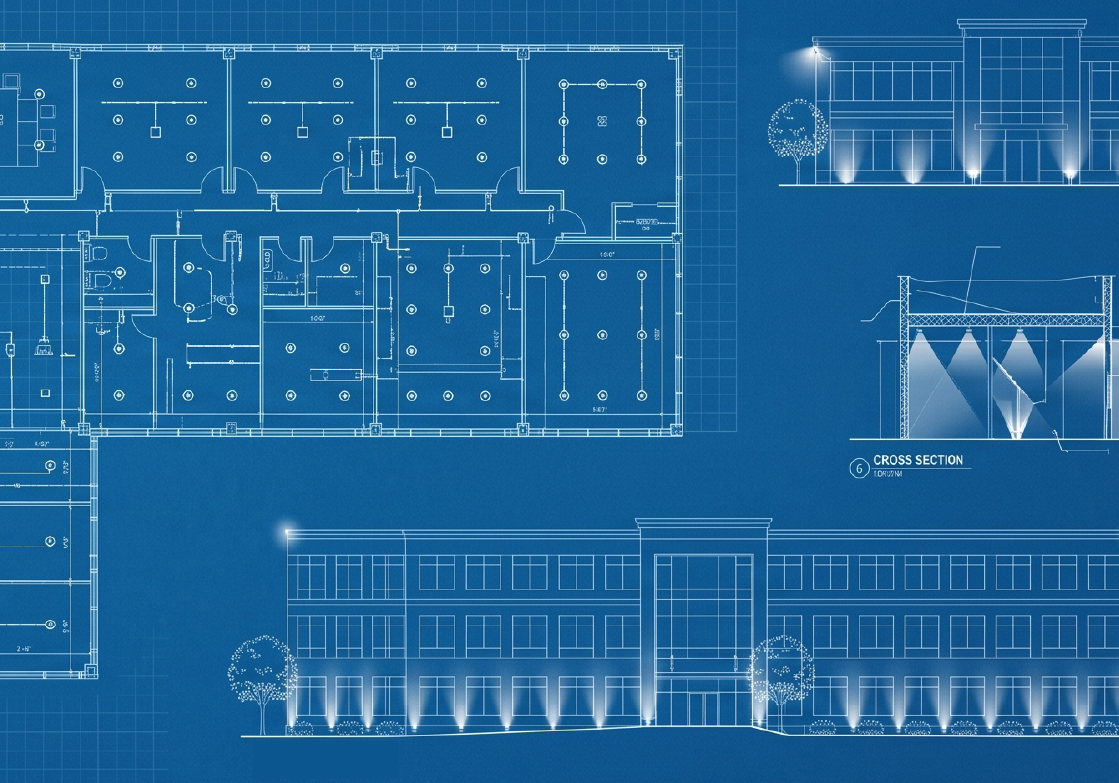
Optics & Beam Angle — Where the light is directed and how the space is covered.
Controls — Whether dimming, occupancy sensing, daylight harvesting, or scheduling can further improve the lighting environment.
The best CCT cannot compensate for insufficient light levels, excessive glare, poor distribution, or the wrong fixture for the application.
The Bottom Line
There is no universal “best” LED colour temperature.
2700K–3000K is often a strong choice when comfort and warmth are priorities.
3500K–4000K provides a versatile middle ground for many residential, commercial, and industrial environments.
4000K–5000K can be useful when a crisp, task-oriented appearance and visual clarity are priorities.
The best specification starts with the application first, then the lighting requirements, then the fixture and CCT.
By understanding how colour temperature changes the appearance and experience of a space, contractors and specifiers can make more intentional lighting selections—and choose solutions that perform well for the people using the space.

'%20d='M34.017,41.99l-20,0.019c-4.4,0.004-8.003-3.592-8.008-7.992l-0.019-20%20c-0.004-4.4,3.592-8.003,7.992-8.008l20-0.019c4.4-0.004,8.003,3.592,8.008,7.992l0.019,20%20C42.014,38.383,38.417,41.986,34.017,41.99z'/%3e%3cradialGradient%20id='yOrnnhliCrdS2gy~4tD8mb'%20cx='11.786'%20cy='5.54'%20r='29.813'%20gradientTransform='matrix(1%200%200%20.6663%200%201.849)'%20gradientUnits='userSpaceOnUse'%3e%3cstop%20offset='0'%20stop-color='%234168c9'/%3e%3cstop%20offset='.999'%20stop-color='%234168c9'%20stop-opacity='0'/%3e%3c/radialGradient%3e%3cpath%20fill='url(%23yOrnnhliCrdS2gy~4tD8mb)'%20d='M34.017,41.99l-20,0.019c-4.4,0.004-8.003-3.592-8.008-7.992l-0.019-20%20c-0.004-4.4,3.592-8.003,7.992-8.008l20-0.019c4.4-0.004,8.003,3.592,8.008,7.992l0.019,20%20C42.014,38.383,38.417,41.986,34.017,41.99z'/%3e%3cpath%20fill='%23fff'%20d='M24,31c-3.859,0-7-3.14-7-7s3.141-7,7-7s7,3.14,7,7S27.859,31,24,31z%20M24,19c-2.757,0-5,2.243-5,5%20s2.243,5,5,5s5-2.243,5-5S26.757,19,24,19z'/%3e%3ccircle%20cx='31.5'%20cy='16.5'%20r='1.5'%20fill='%23fff'/%3e%3cpath%20fill='%23fff'%20d='M30,37H18c-3.859,0-7-3.14-7-7V18c0-3.86,3.141-7,7-7h12c3.859,0,7,3.14,7,7v12%20C37,33.86,33.859,37,30,37z%20M18,13c-2.757,0-5,2.243-5,5v12c0,2.757,2.243,5,5,5h12c2.757,0,5-2.243,5-5V18c0-2.757-2.243-5-5-5H18z'/%3e%3c/svg%3e)

