


From Spec Sheet to Jobsite: Why Photometric Design Matters
From Spec Sheet to Jobsite: Why Photometric Design Matters
A lighting specification can tell you a lot about a fixture: wattage, lumens, beam angle, distribution, efficacy, and more. But those numbers only tell part of the story.
A fixture may produce 20,000 lumens, but that does not automatically mean it will provide the right amount of light where it is needed.
What matters is how the fixture performs within the actual space.
A photometric layout applies the fixture’s tested photometric data to the project, taking into account mounting height, fixture location, spacing, distribution, and aiming. The result provides a visual and measurable representation of how light is expected to reach the intended area.
For contractors, distributors, and specifiers, this helps bridge the gap between “this fixture has the right specifications” and “this fixture is the right solution for this application.”
What Does a Photometric Plan Show?
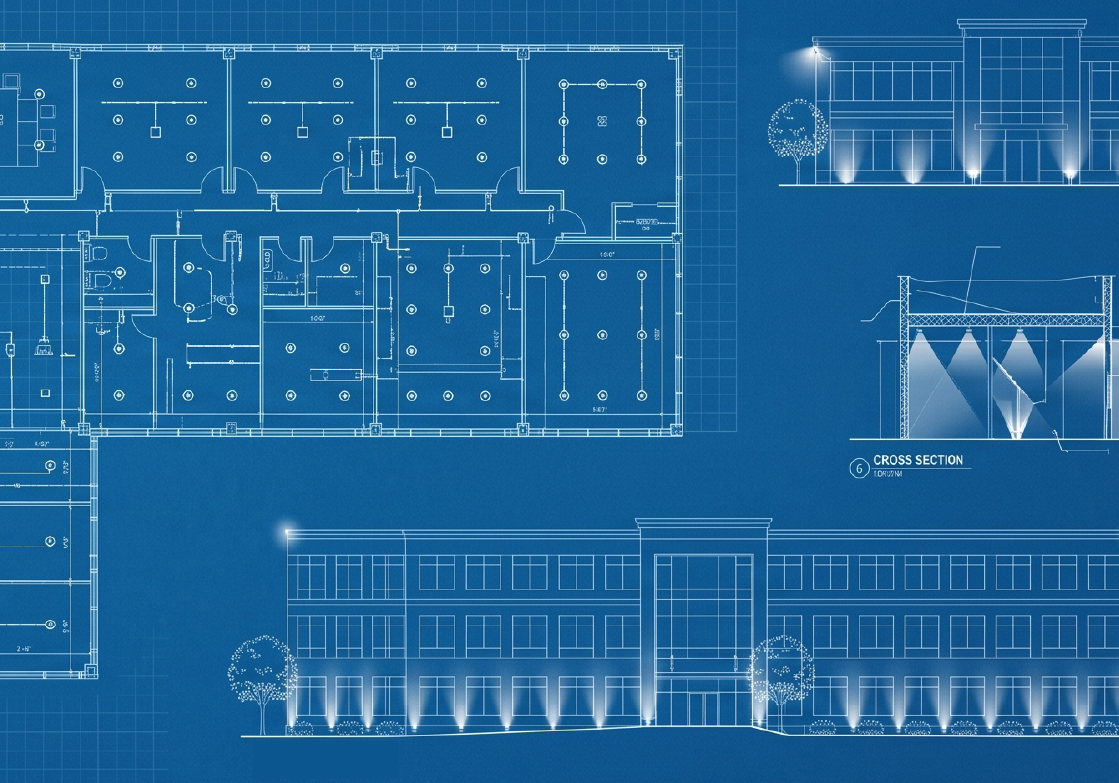
A photometric plan provides a preview of the lighting design before installation.
Depending on the application, it can show fixture locations, mounting heights, light distribution, calculated illuminance levels, and uniformity across the area being evaluated. Outdoor layouts can also show how light is expected to extend across parking lots, drive lanes, walkways, building perimeters, and other exterior spaces.
Rather than evaluating a fixture on its own, the plan shows how multiple fixtures work together within the space.
Why Mounting Height Matters
The same fixture can produce different results depending on where it is mounted.
As mounting height changes, so does the distance between the luminaire and illuminated surface. Raising a fixture can increase the area reached by the light, but it can also reduce illumination at the surface when output and distribution remain unchanged.
Mounting height also influences fixture spacing. A high bay installed at 25 feet, for example, should not automatically be expected to perform the same way as the same fixture installed at 15 feet.
Mounting height, optics, spacing, and the target area all need to work together.
Fixture Spacing
How fixtures are spaced across a space directly affects how their light distributions overlap and how evenly the area is illuminated. Spacing should be evaluated in relation to mounting height, distribution, optics, and the intended lighting requirements rather than treated as a fixed distance that works for every application.

Hot Spots
When fixtures are positioned too closely together, their light distributions can overlap excessively, creating areas with significantly higher illuminance than the surrounding space. These hot spots can contribute to an uneven appearance and may indicate that fixture spacing or output should be adjusted.
Dark Areas
When fixtures are spaced too far apart, their distributions may not overlap enough to provide consistent coverage. This can create dark areas between fixtures, along the edges of a layout, or in areas outside the intended distribution.
Uniformity
Spacing also plays an important role in uniformity, or how consistently light is distributed throughout an area. A well-planned layout balances fixture spacing and distribution to reduce large variations between brighter and darker points.
Edge Coverage
Spacing becomes particularly important near the perimeter of a space. Fixtures placed too far from walls, aisles, walkways, or other boundaries can leave underlit areas, while placing them too close can create excessive light levels near the edge.
A photometric layout helps identify these effects before installation, making it possible to adjust fixture locations, spacing, mounting height, or optics while changes are still practical.
Light Levels, Distribution & Aiming
A fixture’s lumen output is only one part of how it performs in a space. How much light reaches a surface and where that light falls depends on factors such as optics, mounting height, spacing, and aiming.
Lumens vs. Illuminance
Lumens describe a fixture’s total light output, while illuminance describes how much light reaches a specific surface. Two fixtures with similar lumen output can produce different results depending on how their light is distributed.
Photometric calculations show expected light levels at specific points within the space, helping determine whether the fixture and layout meet the project’s requirements.
Distribution
A fixture’s optical distribution determines how broadly light spreads and where it is concentrated. The appropriate distribution depends on the space. For example, a wider distribution may suit an open area, while a more controlled distribution can direct light along aisles, walkways, or specific work areas.
Aiming & Orientation
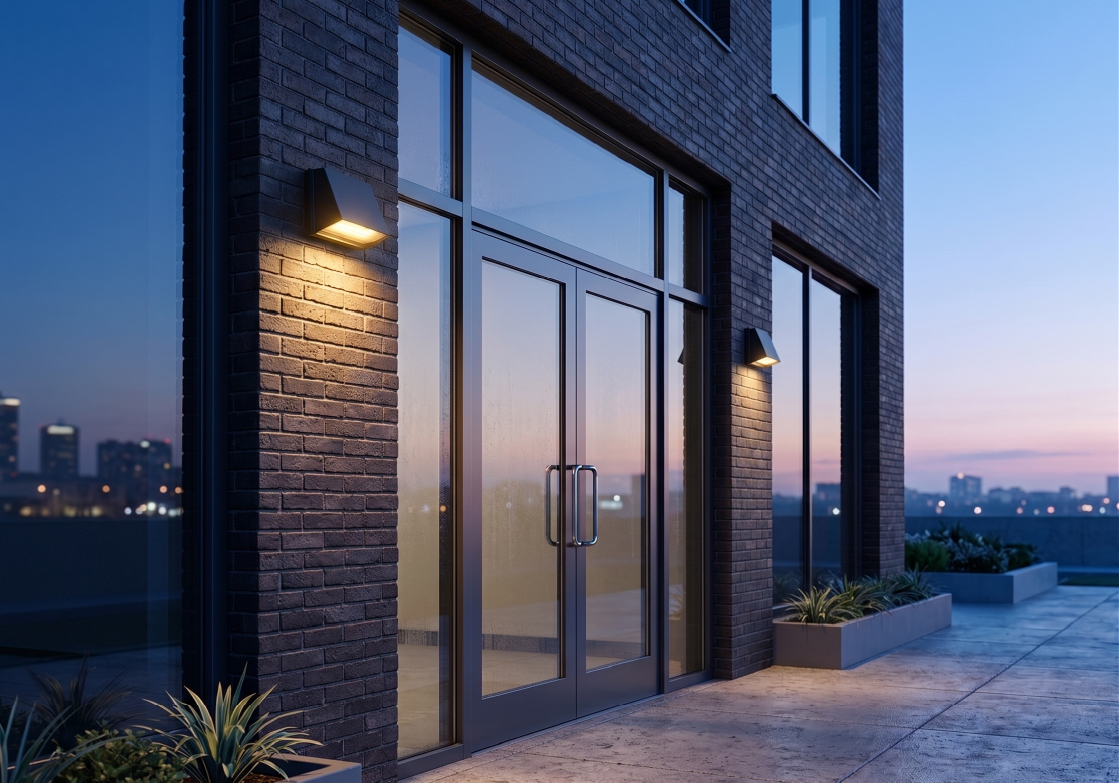
Aiming is particularly important for outdoor applications, where fixtures are often mounted in fixed locations. Changing the tilt or orientation of an area light can change where light falls across a parking lot, walkway, or building perimeter. The same fixture can produce different results depending on how and where it is installed.
See how the two different fixtures compare when tested for the same space.
Why Review the Design Before Installation?
Once fixtures are installed, changes become much more difficult. Reviewing a photometric design beforehand provides an opportunity to identify potential issues while there is still time to make adjustments.
Catch Issues Early
Potential coverage gaps, excessive overlap, poor uniformity, or ineffective fixture placement can be identified before installation begins.
Coordinate the Project
A photometric plan gives contractors, distributors, specifiers, and other project stakeholders a shared reference for fixture placement and expected lighting performance.
Increase Installation Confidence
Reviewing the layout helps confirm that the selected fixture and proposed arrangement align with the project’s requirements before equipment reaches the jobsite.
This is where photometric design becomes more than a calculation. It connects the information on the fixture spec sheet to how the lighting is expected to perform in the finished space.
CSC LED’s Complimentary Photometric Layouts

CSC LED offers complimentary photometric layouts to support the project process.
Using project information and scope, CSC LED can create lighting layouts based on selected fixtures and applicable IES recommendations. The layout can help evaluate fixture placement, mounting height, spacing, light levels, and overall uniformity before installation.
Whether the project involves an industrial facility, commercial property, parking area, sports application, or another lighting environment, a photometric layout provides another level of confidence when selecting and positioning fixtures.
The goal isn't simply to choose a fixture that looks right on a spec sheet. It’s to make sure the lighting solution works for the space.

'%20d='M34.017,41.99l-20,0.019c-4.4,0.004-8.003-3.592-8.008-7.992l-0.019-20%20c-0.004-4.4,3.592-8.003,7.992-8.008l20-0.019c4.4-0.004,8.003,3.592,8.008,7.992l0.019,20%20C42.014,38.383,38.417,41.986,34.017,41.99z'/%3e%3cradialGradient%20id='yOrnnhliCrdS2gy~4tD8mb'%20cx='11.786'%20cy='5.54'%20r='29.813'%20gradientTransform='matrix(1%200%200%20.6663%200%201.849)'%20gradientUnits='userSpaceOnUse'%3e%3cstop%20offset='0'%20stop-color='%234168c9'/%3e%3cstop%20offset='.999'%20stop-color='%234168c9'%20stop-opacity='0'/%3e%3c/radialGradient%3e%3cpath%20fill='url(%23yOrnnhliCrdS2gy~4tD8mb)'%20d='M34.017,41.99l-20,0.019c-4.4,0.004-8.003-3.592-8.008-7.992l-0.019-20%20c-0.004-4.4,3.592-8.003,7.992-8.008l20-0.019c4.4-0.004,8.003,3.592,8.008,7.992l0.019,20%20C42.014,38.383,38.417,41.986,34.017,41.99z'/%3e%3cpath%20fill='%23fff'%20d='M24,31c-3.859,0-7-3.14-7-7s3.141-7,7-7s7,3.14,7,7S27.859,31,24,31z%20M24,19c-2.757,0-5,2.243-5,5%20s2.243,5,5,5s5-2.243,5-5S26.757,19,24,19z'/%3e%3ccircle%20cx='31.5'%20cy='16.5'%20r='1.5'%20fill='%23fff'/%3e%3cpath%20fill='%23fff'%20d='M30,37H18c-3.859,0-7-3.14-7-7V18c0-3.86,3.141-7,7-7h12c3.859,0,7,3.14,7,7v12%20C37,33.86,33.859,37,30,37z%20M18,13c-2.757,0-5,2.243-5,5v12c0,2.757,2.243,5,5,5h12c2.757,0,5-2.243,5-5V18c0-2.757-2.243-5-5-5H18z'/%3e%3c/svg%3e)

